
Last updated on February 6th, 2026
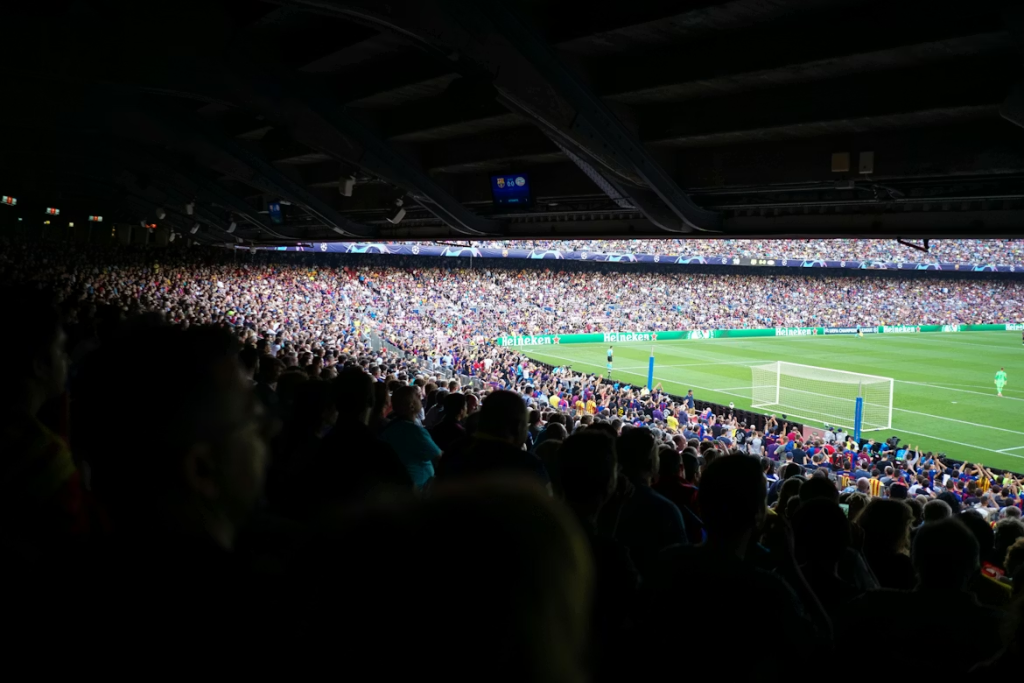
Image from Unsplash.com
The most argued moment in football is often not a goal. It is a yellow/red card, the referee’s raised eyebrow, the replay that somehow looks different from three angles, and the instant flood of hot takes.
Gambling.com is leaning into that chaos with Dirty Dozen, a free-to-play prediction game built around one simple question asked 12 times: Will a selected Premier League player end up in the book in their next match? A perfect set of picks pays a €12,000 jackpot, and the format comes with guardrails on eligibility, minimum bookings, and prize splits. The game went live last month in the United Kingdom and the Republic of Ireland, adding another layer to the company’s growing free-to-play library.
Why Bookings Are a Different Kind of Football Metric
Most prediction games chase the obvious. Goals, assists, corners, first scorer. Bookings sit in a strange lane, half performance, half temperament, half tactics. A defender isolated in transition is at the mercy of a sprinting winger. A midfielder on a late press can rack up fouls without looking reckless. Even the match state matters, because a tired team that cannot hold the ball tends to foul and chase.
That mix creates a hook for fans who watch closely. The question is not only who is good, but who is likely to be forced into a professional foul, who is nursing a suspension risk, and who is about to spend 90 minutes in a personal duel. In practical terms, the game asks players to turn the little clues in match previews into yes-or-no answers.
Inside Dirty Dozen: What it asks players to do
Each gameweek, users face a set of 12 prompts tied to 12 top-flight footballers. For each player, the task is to predict whether they will be shown a card in their next league fixture.
Gambling.com positions the game as skill-based in the sense that the picks are influenced by context. The opponent matters, as does the likely matchup on the flank or in midfield. Weather can tilt a game toward scrappier contests. Team style plays a role, too, because some sides consistently play on the edge, while others keep the foul count low.
Players with a full set of correct picks, 12 out of 12, are eligible for the headline prize of €12,000. If more than one entrant finishes perfectly, the jackpot is split, and leaderboard ties can also be resolved through splitting or tie-break rules.
The small-print rules, and why they exist
Dirty Dozen is free to enter, but it is not designed for random clicking. One rule blocks a common loophole: entries that answer “no” to every single player are not eligible for prizes.
Two other requirements are meant to stop the jackpot from being decided by an unusually quiet round of fixtures. For the €12,000 jackpot to be valid, at least three of the selected players must actually be booked in that gameweek’s matches. For leaderboard prizes, at least one player must be booked.
Those thresholds are a reminder of how much variance a bookings market carries. A single early card can reshape how a player defends for the next hour. One referee can let marginal challenges go, another can tighten the game from the opening minutes. Injuries, rotation, and late tactical tweaks all creep in, which is why outcomes can feel as unpredictable as those seen across trusted online casinos UK that rely on chance and probability.
The company also limits participation to one free attempt per member each gameweek. That restriction is a familiar structure in free-to-play formats, where the aim is repeat visits and long-term engagement rather than brute-force volume.
In other words, the rules try to keep the game competitive and readable. There is room for football knowledge to matter, while still accepting that a bookings-based contest will never be fully predictable.
Why free-to-play games keep showing up in modern betting media
Free-to-play products have become a comfortable bridge between content and wagering. They create something to do on a Monday afternoon, long before a Saturday match kicks off, and they can be offered without asking users to deposit or stake money.
For brands in the online gaming ecosystem, that lower-friction entry point matters. It allows an audience to register, return weekly, and build habits around a site, while the product itself stays on the safer side of the spectrum, framed as a prediction challenge rather than a paid bet.
What Gambling.com is Signalling With This Launch
Gambling.com is best known for reviewing and ranking online casinos and betting sites, acting as a mediator between operators and players. On 18 December 2025, it announced Dirty Dozen as a new free-to-play add-on, a way to keep users returning weekly even when they are not actively shopping for a sportsbook.
The company says the jackpot is €12,000 per gameweek, and that members receive one free go at the 12 questions. The prize mechanics, including splitting the pot in the event of multiple perfect entries, resemble other free-to-play contests built around fairness rather than winner-takes-all drama.
A company spokesperson, Dean Ryan, described the appeal in simple terms: games that test knowledge without requiring users to spend money tend to be sticky, and the variation in booking rates across teams makes the picks feel meaningful rather than random.
Gambling.com has also pointed to an existing base of more than 25,000 registered members, and framed Dirty Dozen as the kind of addition that could push that number higher as the Premier League schedule rolls on.
Where it could go next…
For now, the game is live in the UK and Ireland, and tied to Premier League fixtures. The league choice makes sense because it is globally consumed, reliably scheduled, and endlessly discussed in detail, including the sport’s disciplinary side.
If the format gains traction, expansion paths are obvious. Other leagues offer different refereeing styles and different foul profiles. Cups and international tournaments deliver concentrated attention. Variations could also focus on red cards, suspensions, or team booking totals, all of which keep the same core idea while changing the puzzle.
The challenge for any bookings-based game is balancing skill and randomness. The Dirty Dozen’s structure suggests that Gambling.com is trying to sit in the middle, keeping it simple to play, limiting repeated entries, and letting the week-to-week noise of football do the rest.
Dirty Dozen does not pretend that anyone can forecast the referee’s notebook with perfect accuracy. Instead, it treats that uncertainty as the product. The game turns a familiar fan argument-” who is likely to lose their head or take a tactical foul?”-into a weekly set of decisions.
In a crowded market for attention, the bet is that football supporters will keep coming back for a free chance at €12,000, even if the real reward is the feeling of being right about the parts of the game that most people only notice when they are furious.